Категории
Новый блог
Hot Melt Coating Solutions for Gift Box and Rigid Box Manufacturing
November 26 , 2026Gift boxes and rigid boxes - the kind used for watches, cosmetics, electronics, wine, and premium retail packaging - are built by wrapping a printed paper skin around a rigid board core. The joint that holds that skin in place decides whether the box looks premium or looks cheap. A wrapped edge that lifts after two weeks, a wrapper with visible glue bleed-through, or a surface that ripples because too much adhesive was applied will get a whole shipment rejected.
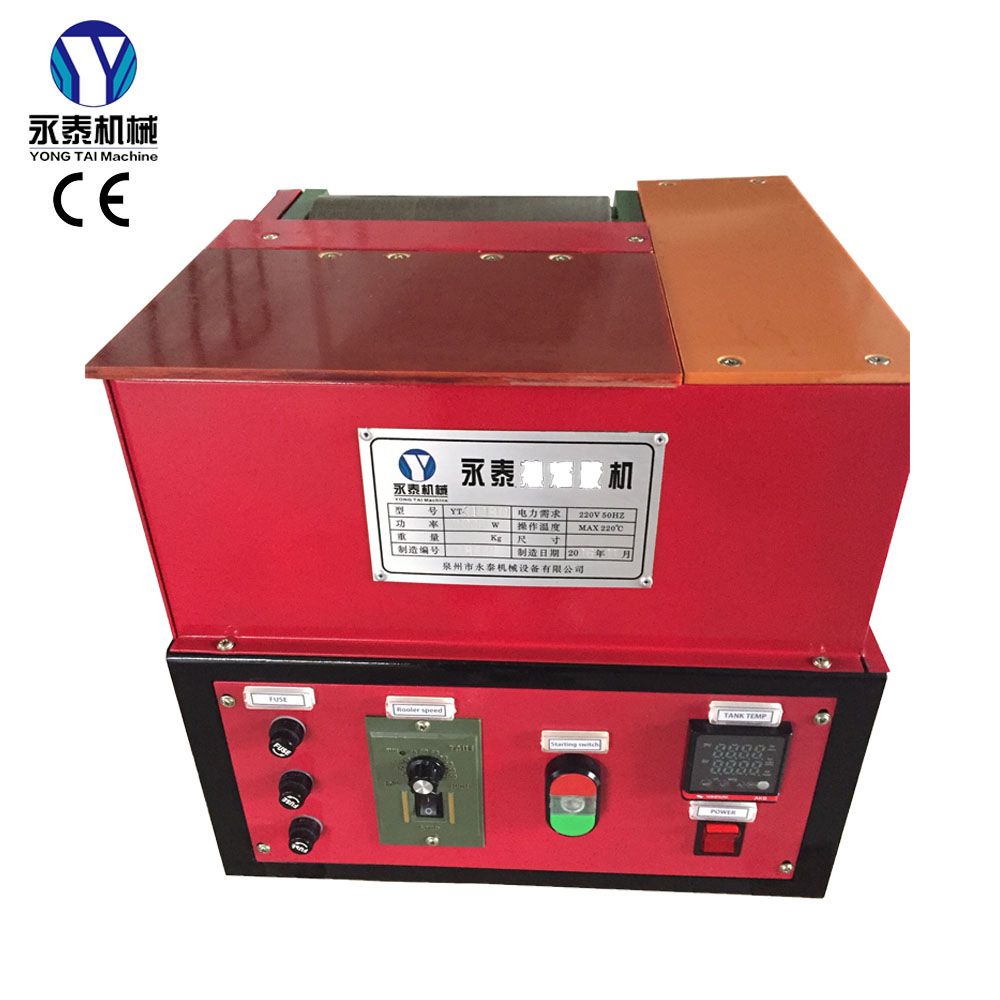
Hot melt coating is the process most rigid box plants use to solve this. Instead of water-based glue that needs drying time, a gift box hot melt gluing machine melts solid adhesive and applies a thin, controlled film at the wrap station. The bond sets within seconds as the adhesive cools, so the box can move straight to the next step without a drying tunnel.
This guide covers how the process works, which machine configurations fit different production volumes, how to pick the right adhesive for coated and uncoated paperboard, and how to fix the two problems that show up most often on rigid box lines: glue overflow and weak bonding on thick board.
Why Hot Melt Is the Default Choice for Rigid Box Wrapping
Rigid box assembly has requirements that water-based adhesives struggle with:
●No drying tunnel. Hot melt is a 100% solid adhesive. Nothing evaporates, so nothing has to be dried out. A plant with limited floor space can run a full rigid box line without a drying oven or its energy cost.
●Instant grab. The adhesive goes from molten to tacky to firm in seconds. The wrapper is held by the bond itself, not by clamps, so the machine can run faster and rejects from slippage drop sharply.
●No moisture attack on board. Water-based glue wets the board and can cause cockle, warp, or delamination on the greyboard and paperboard used in rigid box cores. Hot melt deposits a film on the surface without wetting it through.
●Clean edges. A thin, metered film produces a sharp wrapped edge with no squeeze-out. This matters most on dark, matte, or soft-touch laminated skins where any glue stain is permanent and obvious.
●Works on coated and laminated stock. Many gift box skins are laminated, varnished, or film-coated. Hot melt bonds to these surfaces reliably; water-based glue often needs extra surface treatment or heavier coat weight.
How the Coating Process Runs on a Rigid Box Line
A typical sequence on a semi-automatic rigid box line looks like this:
1. Board feed. Greyboard, chipboard, or duplex board (commonly 200-800 gsm, or 1.0-2.5 mm thickness) enters the gluing station.
2. Melting and temperature stabilization. Solid adhesive is melted in the tank and held at a stable working temperature. Temperature control is the single most important variable - too cold and the film will not transfer, too hot and the adhesive degrades, chars, or strings.
3. Film application. A roller coater or a nozzle applicator deposits adhesive at the target coat weight, usually in the range of 15-40 gsm depending on board and skin.
4. Wrapping and pressing. The printed skin is wrapped around the glued core and pressed. Because the adhesive is still warm, the bond forms immediately.
5. Cooling set. The box cools on the conveyor or in a stack. Full bond strength develops within minutes; the box can be packed shortly after.
The whole cycle is mechanical, which is why a rigid box hot melt coater can hold a consistent output hour after hour while manual gluing drifts with operator fatigue.
Machine Configurations and Where Each One Fits
There is no single machine for every gift box plant. Three configurations cover most of the market.
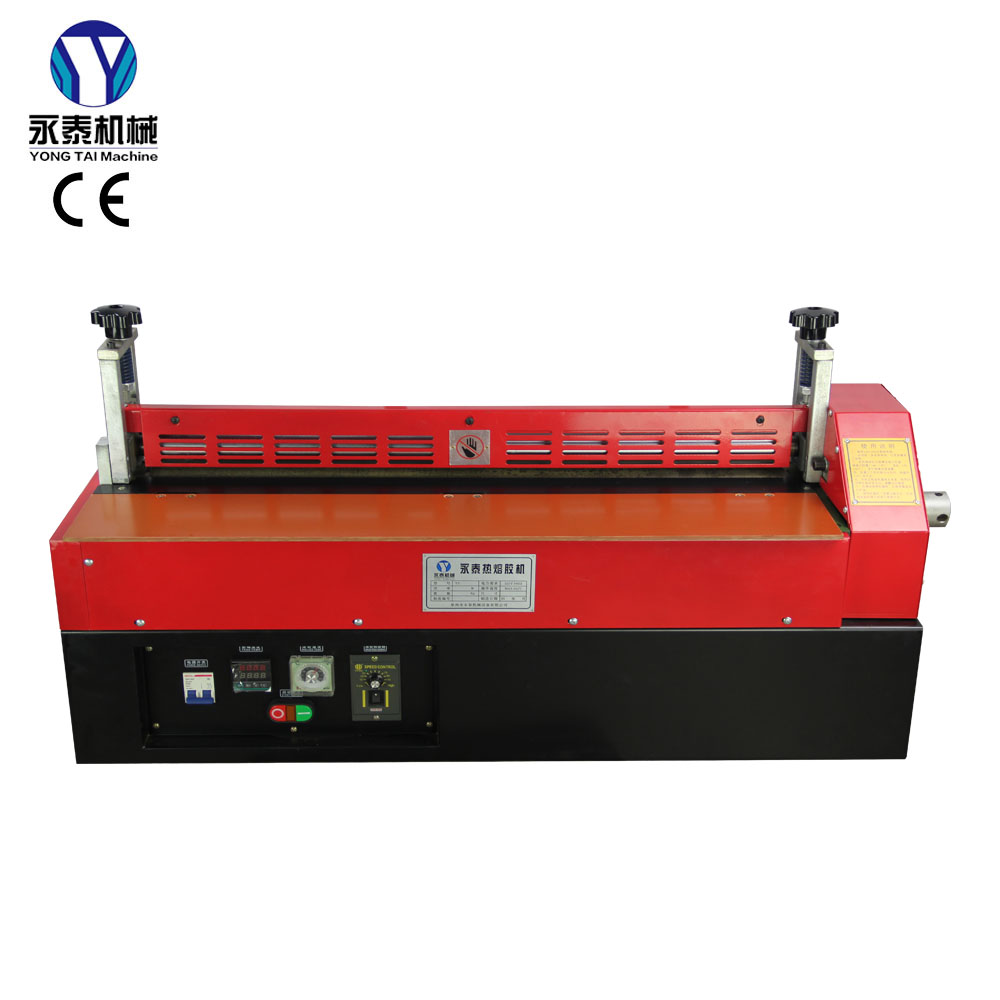
1. Wide roller coaters for continuous production. For plants running standard rigid box sizes at volume, a roller coater with a wide coating width and a gear pump is the workhorse. An 800mm width hot melt roller coater covers the full width of most rigid box blanks in one pass, so the operator does not have to run the board through twice. Gear pump delivery gives a consistent film thickness across the full width and holds it as the tank level drops - a point worth checking, because a machine that thins out as the tank empties produces inconsistent bond strength between the first and last box of a batch.
2. Manual and semi-automatic units for small batches and sampling. Plants producing short runs, samples, or large-format presentation boxes often do not need a full in-line coater. A hand push hot melt glue machine lets the operator move the applicator along the board, which suits one-off boxes, oversized formats, and repair work on a finished box. It is also the most affordable entry point for a workshop testing whether hot melt fits its product mix, and it doubles as backup capacity when the main line is down.
3. Nozzle applicators for selective and edge-only glue lines. Where adhesive is needed only along an edge or at a few points - common on certain box closures and on fabric-wrapped or leather-look presentation boxes - a hot melt nozzle deposits glue precisely without coating the whole surface. Nozzle systems use less adhesive and eliminate the overflow risk inherent in full-surface coating, but they demand cleaner adhesive and a tighter maintenance routine because the orifices are small.
Selecting Hot Melt Adhesive for Paper Box Applications
The adhesive is as important as the machine. Three families dominate gift box and rigid box work.
EVA-based hot melt is the mainstream choice for paper and board assembly. It offers good adhesion to coated stock, a wide working temperature window (typically 150-180 degrees C), and a low enough viscosity to run through roller and nozzle systems. For most gift box skins, EVA delivers the right balance of cost, bond strength, and clean edges. It is also the most forgiving adhesive for plants still dialing in temperature and coat weight.
Polyolefin (PO) or APAO-based hot melt is chosen when temperature resistance matters. Gift boxes that will sit in a hot warehouse, a shipping container, or a retail window need a bond that does not soften at 45-55 degrees C. PO adhesives hold up far better in these conditions and resist yellowing, which makes them the safer choice for white and light-colored boxes.
PUR reactive hot melt is the high-performance option. It bonds chemically as well as physically, giving strong adhesion to difficult substrates including some films and varnishes, and excellent resistance to heat and moisture. The trade-offs are higher cost, moisture-sensitive storage, and the need for proper ventilation and handling procedures. For most standard gift box work it is unnecessary; for premium rigid boxes with laminated skins or demanding shipping conditions it is worth the cost.
Whichever family is selected, match the adhesive viscosity and open time to the machine. An adhesive designed for nozzle application may be too fluid for a wide roller coater, and a high-viscosity grade may not flow evenly through a small nozzle.
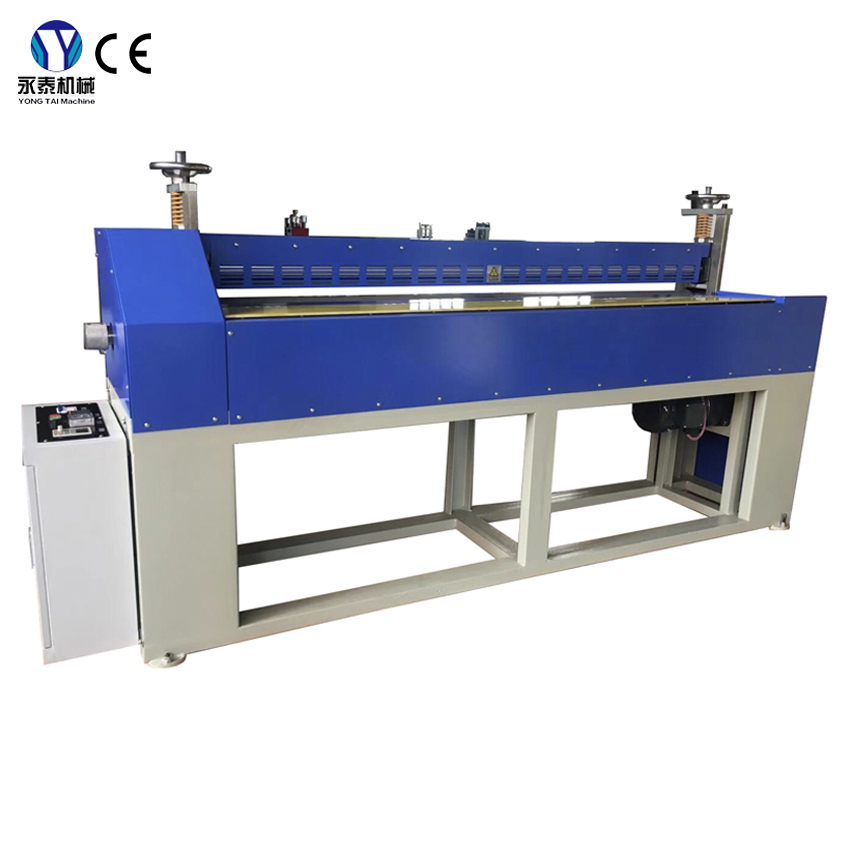
Specification Checklist Before Buying
When comparing gift box hot melt gluing machines, the differences that matter in daily production are rarely on the headline spec sheet.
●Coating width versus your widest common blank. Buying one size down to save money usually means running blanks twice, which costs labor and creates a visible seam.
●Pump type and metering stability. Gear pump delivery holds film thickness as tank level changes. Cheaper systems that rely on tank pressure alone thin out over a shift.
●Temperature control zones. Separate control of tank, hose, and applicator temperature lets you tune the adhesive for the substrate. A single thermostat means compromises.
●Melting capacity versus hourly consumption. An undersized melt rate creates a bottleneck at shift start and forces the operator to rush the temperature recovery.
●Coating thickness adjustment. You need repeatable, indexed adjustment. Rigid box work involves switching between board weights in the same day, and each weight wants a different coat weight.
●Speed and line integration. Confirm the machine maximum speed matches your wrapper or folder, not just the coater own rating.
●Safety and compliance. CE marking, guarding on the melt tank and rollers, and emergency stops are baseline requirements for export markets.
●Service and spare parts. Heated hoses, filters, and nozzles are consumables. Check lead times before you buy, not after a breakdown.
Troubleshooting the Two Most Common Rigid Box Problems
Glue overflow on the gift box surface. Overflow almost always traces to one of four causes: excessive coat weight, excessive application pressure at the wrap station, adhesive temperature too high (which thins the film and lets it spread), or a wrapper that is being stretched over the core rather than laid on it. The fix sequence is to reduce coat weight first, then check the temperature setpoint against the adhesive datasheet, then review wrapping pressure. If overflow appears only on one side of the box, check roller alignment before touching any settings.
Weak bonding on thick cardboard. Thick board absorbs heat, so the adhesive film on the surface cools faster than it does on thin stock, and the bond never fully wets out. Two adjustments solve most cases: raise the adhesive temperature slightly (within the supplier range) so there is more thermal mass in the film, and increase press time or pressure at the wrap station so the film contacts the board before it firms up. On very heavy board, a higher coat weight is sometimes required - but increase it last, because it reintroduces the overflow risk.
Maintenance Routine That Protects Bond Quality
●Daily: check tank level and top up with clean adhesive; verify temperatures on all zones; wipe the applicator.
●Weekly: inspect the film for streaks or thin patches, which indicate a worn roller, a partial nozzle clog, or debris in the filter. Clean or replace the filter element.
●Monthly: check hose insulation and connections for heat loss, verify pump delivery consistency, and inspect guarding and emergency stops.
●Per adhesive batch: keep a record of the batch number against production lots. If a bond failure appears, this record is the fastest way to separate an adhesive problem from a machine problem.
FAQ
Can a hot melt machine glue thick cardboard?
Yes, but thick board needs adjustment rather than a default setting. Board above roughly 1.5 mm draws heat out of the adhesive film quickly, so the window between application and pressing shrinks. Raise the adhesive temperature modestly within the supplier recommended range, increase press pressure or dwell time at the wrap station, and confirm coat weight on a test box before running the batch. On very heavy board, preheating the blank slightly before coating helps most.
How do you avoid glue overflow on a gift box surface?
Control the film, not the wrapping. Set coat weight to the lowest value that still gives a full bond on a pull test, keep adhesive temperature inside the supplier range, and keep roller pressure even across the width. A wrapper that is pulled tight over the core squeezes adhesive outward, so train operators to lay the skin rather than stretch it. On laminated or soft-touch skins, add a small safety margin in coat weight only after confirming the edge behavior on samples.
What hot melt adhesive is suitable for paper boxes?
EVA-based hot melt is the standard for general paper and board box assembly, and it is the most forgiving to run. Choose polyolefin or APAO-based adhesive when the box will be exposed to heat in storage or transit, or when yellowing resistance matters on white stock. Choose PUR reactive hot melt only when the skin substrate is difficult to bond or the shipping conditions are severe, and accept its higher cost and stricter handling requirements.
Final Thoughts
A rigid box line is judged on its wrapped edges. Hot melt coating gives you a bond that sets without drying, a film you can meter to a fraction of a gram, and a finished box that does not warp or stain. The machine choice follows from your batch profile: a wide rigid box hot melt coater for volume production, a compact unit for short runs and samples, and a nozzle system where adhesive belongs on an edge rather than across the whole panel.
Yongtai Machine builds hot melt coating and gluing equipment for gift box, rigid box, and carton production, with gear pump delivery, multi-zone temperature control, and CE-compliant configurations for export markets. Contact our technical team with your board weight, box format, and hourly output target, and we will specify the coating width, pump type, and adhesive recommendation for your line.
 Связаться с нами
Тел : +86-13599291170
Мобильный : +86-13599291170


Поддерживается сеть IPv6